




Invisalign and Temple Pain: What’s the Connection?
Starting your Invisalign journey is an exciting step toward achieving the smile you have always wanted. The clear aligners are known for their comfort and discretion, but like any orthodontic treatment, there is an adjustment period. While some initial pressure or mild discomfort is normal, some patients report an unexpected symptom: pain in their temples.
If you are experiencing headaches or a dull ache in your temples after starting Invisalign, it is understandable to be concerned. Is this normal? What is causing it? This guide will explain why you might be feeling pain in your temples, its connection to your jaw and teeth, and what you can do to find relief.
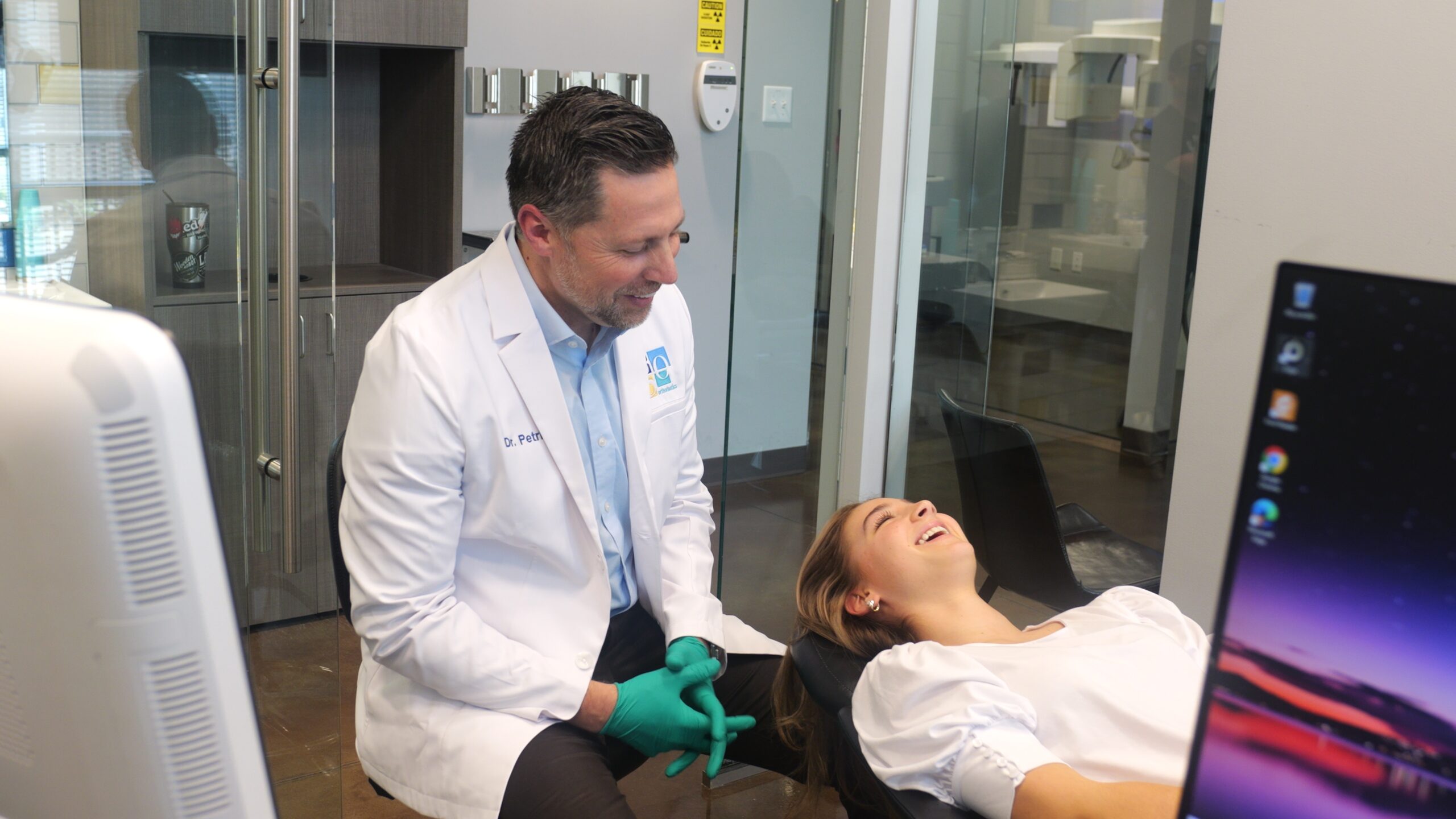
Why Does Invisalign Cause Pain in the Temples?
Pain that originates in one part of the body but is felt in another is known as “referred pain.” Your head, jaw, and neck are intricately connected by a complex network of muscles, nerves, and joints. When one part of this system is under stress, the discomfort can radiate to other areas. Temple pain during Invisalign treatment is a classic example of this.
There are a few key reasons why the gentle pressure of your aligners might lead to tension headaches felt in your temples.
1. The Temporalis Muscle and Teeth Clenching
One of the largest muscles on the side of your head is the temporalis muscle. It is a fan-shaped muscle that stretches from your temple down to your jaw. Its primary job is to help you close your mouth and chew.
When you first get your Invisalign aligners, or when you switch to a new set, your mouth has to adapt. The new sensation of the plastic trays and the pressure on your teeth can cause you to unconsciously clench or grind your teeth (a condition called bruxism). When you clench your jaw, the temporalis muscle becomes overworked and tense. This constant muscle contraction can lead to tension headaches that you feel directly in your temples.
2. Adjusting to a New Bite
Invisalign works by gradually shifting your teeth into a new, healthier alignment. This process also changes your “bite”—the way your upper and lower teeth come together. As your bite shifts, your jaw may need to find a new resting position.
During this adjustment phase, your jaw muscles can become strained as they adapt to the changes. This can create muscle fatigue and tension that radiates upward, causing pain in your temples, cheeks, and even around your ears. The discomfort is often a sign that your jaw is working to find its new, more comfortable “home.”
3. Normal Orthodontic Pressure
The very force that moves your teeth can also contribute to temporary discomfort. Each new aligner is designed to apply precise, gentle pressure to specific teeth. This pressure stimulates a biological response in your jawbone that allows the teeth to move.
For the first day or two after switching to a new tray, this pressure can feel intense. The sensation can sometimes be perceived as a dull, widespread ache that may extend to your temples. This type of headache is usually mild and temporary, subsiding as your teeth adjust to the new aligner.
Is Temple Pain a Sign Something Is Wrong?
 In most cases, mild temple pain is a normal, temporary side effect of Invisalign treatment, especially during the first few days of wearing a new tray. It is a sign that the aligners are doing their job and your body is adapting.
However, you should pay close attention to the severity and duration of the pain. Persistent or severe headaches that interfere with your daily life or disrupt your sleep are not normal. This could indicate an issue that requires your orthodontist’s attention, such as:
- An Improperly Fitting Aligner: If an aligner was not manufactured correctly or has become warped, it may place incorrect pressure on your teeth, leading to significant discomfort.
- An Underlying TMJ Disorder: You may have a pre-existing issue with your temporomandibular joint (TMJ) that is being aggravated by the orthodontic movement.
- Treatment is Progressing Too Quickly: In rare cases, the planned tooth movement may be too aggressive for your specific anatomy, causing excessive strain.
Never dismiss severe or long-lasting pain. Your orthodontist is your partner in this process, and keeping them informed is crucial for a safe and successful outcome.
Practical Tips for Managing Invisalign Temple Pain
If you are experiencing manageable tension headaches, there are several effective strategies you can use to find relief at home.
1. Over-the-Counter Pain Relief
For mild headaches, an over-the-counter pain reliever like ibuprofen can be very effective. It is often helpful to take a dose about an hour before switching to a new set of aligners, especially before bed, to preemptively manage discomfort. Always follow the dosage instructions on the package.
2. Apply a Warm Compress
A warm compress or heating pad applied to your temples and the sides of your jaw can work wonders. The heat helps to relax tense muscles, including the temporalis muscle, and increase blood flow to the area, which can significantly reduce pain. Apply for 10-15 minutes at a time.
3. Gentle Jaw Stretches and Massage
Your orthodontist can show you simple, gentle stretches to help relieve tension in your jaw muscles. You can also try to gently massage the temporalis muscle yourself. Using your fingertips, apply firm but gentle pressure to your temples and move in slow, circular motions.
4. Be Mindful of Clenching
Throughout the day, consciously check your jaw position. Are you clenching your teeth while you work or concentrate? Try to practice keeping your jaw in a relaxed state. A good mantra to remember is: “Lips together, teeth apart.” Your teeth should only touch when you are chewing.
5. Switch to New Trays Before Bed
A great tip is to switch to your next set of aligners right before you go to sleep. This allows you to sleep through the initial hours of the most intense pressure. By the time you wake up, your teeth will have already begun to adjust, and the discomfort will likely be much less noticeable.
When to Call Your Orthodontist
 While at-home remedies are great for managing minor discomfort, you should contact your orthodontist right away if you experience any of the following:
- Headaches that are severe, debilitating, or feel like a migraine.
- Pain that does not subside after two or three days with a new aligner.
- Discomfort that is not relieved by over-the-counter pain medication.
- Any popping, clicking, or locking of your jaw joint.
Your orthodontist can evaluate your bite, check the fit of your aligners, and ensure your treatment is progressing as it should. They can make necessary adjustments to your plan to ensure your comfort and safety.
Your Partner in a Healthy Smile
Pain in your temples during Invisalign treatment can be unsettling, but it is often just a temporary sign that your body is adapting to the positive changes happening in your mouth. By understanding the cause and using simple management techniques, you can navigate this phase of your treatment comfortably.
If you are in the Raleigh area and have questions about Invisalign or are experiencing any discomfort, please contact us at Gladwell Orthodontics. Our team is dedicated to making your orthodontic experience as smooth and pleasant as possible. Schedule an appointment today, and let us help you achieve your dream smile.
Other Invisalign Pages People Find Interesting: Invisalign Info, Invisalign Videos, Invisalign Testimonials, Invisalign FAQs, and GLO Teeth Whitening