



Can Braces Give You Dimples?

Dimples have long been considered a charming and attractive facial feature. From Hollywood stars to the person next door, a flash of a dimpled smile often captures attention. If you are about to start your orthodontic journey with braces, you might be curious about how treatment will affect your facial appearance. A common and intriguing question we hear is, “Will braces give me dimples?“
While orthodontic treatment can create remarkable changes in your facial profile and symmetry, the short answer to this question is no, braces cannot create dimples. This guide will explore the science behind why dimples appear, explain how braces alter your facial structure, and clarify why creating these cute indentations is not part of the process. We will also dive into the real, and far more valuable, aesthetic changes you can expect from your time in braces.
The Genetic Truth About Dimples
To understand why braces cannot cause dimples, it is essential to first understand what dimples are. Dimples are small, visible indentations on the skin, most commonly found on the cheeks or chin. They are not a result of lifestyle, diet, or dental work; they are a genetic trait you are born with.
The most common type of dimple, the cheek dimple, is caused by a variation in a facial muscle called the zygomaticus major. In most people, this muscle runs as a single, continuous band from the cheekbone down to the corner of the mouth, helping to pull the corners of your mouth up when you smile. In people with dimples, the zygomaticus major muscle is often shorter than usual or splits into two separate bundles of muscle on its way to the corner of the mouth. When a person with this variation smiles, the skin over this small gap is pulled inward, creating the classic indentation we recognize as a dimple.
Because this is a matter of muscular anatomy determined by your DNA, it is considered a dominant genetic trait. This means you only need to inherit one copy of the “dimple gene” from one parent to have them. If one or both of your parents have dimples, your chances of having them are significantly higher. You are either born with the underlying muscle structure for dimples, or you are not. No external device, including braces, can change your facial muscle anatomy.
How Braces Actually Change Your Face
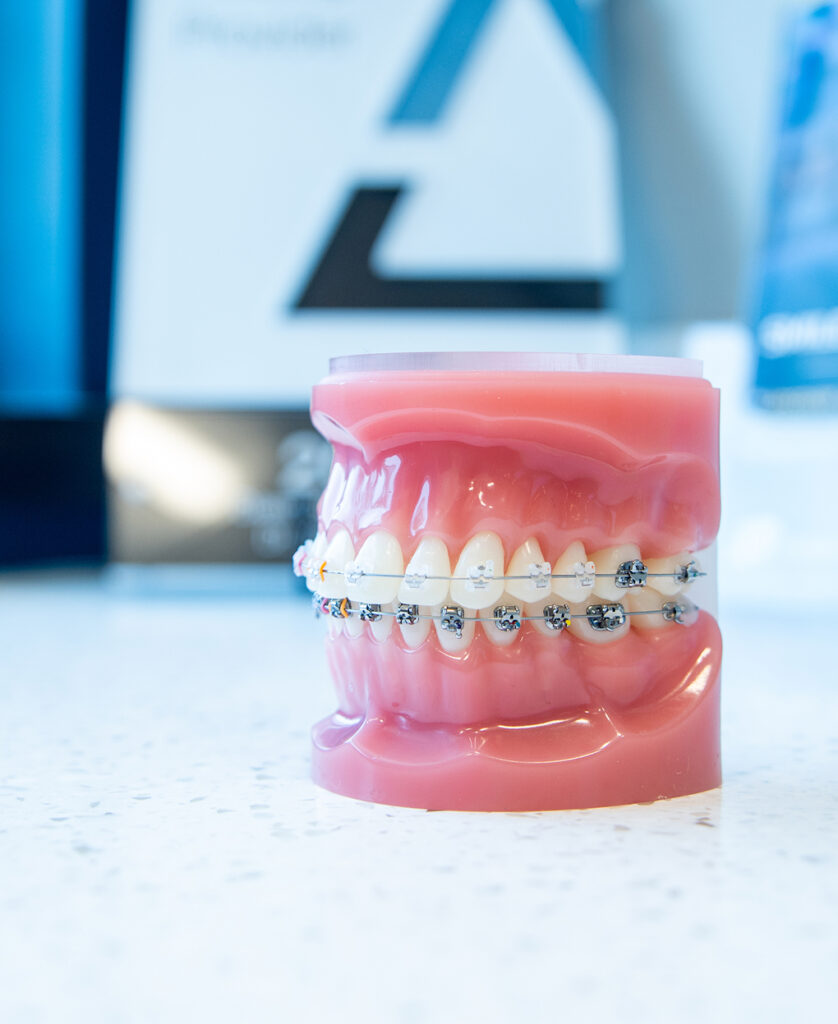 If braces do not create dimples, what do they do? Orthodontic treatment is designed to modify the alignment of your teeth and jaw, which are the foundational structures of the lower third of your face. By correcting dental and skeletal issues, braces can lead to noticeable and positive changes in your facial appearance. The goal is not to create new features, but to enhance the harmony and balance of your existing ones.
Here are the key ways braces can improve your facial profile:
Correcting Bite Issues
Many orthodontic patients have bite misalignments, such as an overbite (where the upper front teeth protrude too far over the lower teeth) or an underbite (where the lower front teeth sit in front of the upper teeth).
- Fixing an Overbite: Correcting an overbite involves moving the upper teeth back into their proper position. This can soften the facial profile, making the chin appear more prominent and creating a more balanced look between the nose, lips, and chin.
- Fixing an Underbite: Treating an underbite moves the lower teeth backward, which can dramatically improve facial harmony. It reduces the “jutting” appearance of the lower jaw, creating a straighter and more aesthetically pleasing profile.
Resolving Crooked Teeth and Crowding
Severely crooked or crowded teeth can affect the appearance of your lips and cheeks. Crowding can sometimes push the lips forward or cause them to look asymmetrical. By aligning the teeth, braces create a broader, more even arch. This provides better support for the lips, often resulting in a fuller, more relaxed, and more symmetrical smile.
Improving Facial Symmetry
Our brains are naturally drawn to symmetry. Orthodontic treatment plays a significant role in improving the overall symmetry of your face. By aligning the teeth and correcting jaw misalignments, braces help ensure that the midline of your teeth lines up with the center of your face. This subtle change can make your entire face appear more balanced and proportionate.
The changes brought about by braces are a result of moving teeth and, in some cases, guiding jaw growth. These modifications happen within the bone and dental structures inside your mouth. They do not alter the muscles of your cheeks, and therefore, they cannot create dimples.
The Illusion of “Braces Dimples”
So, why does this myth persist? A few factors might create the temporary illusion of dimples for some patients wearing braces.
When braces are first placed, the brackets add a slight amount of bulk to the front of your teeth. This can cause your lips to sit a bit differently over your teeth. Furthermore, some people adjust how they smile or hold their mouth to get used to the new appliances. This change in muscle use could temporarily create small indentations in the cheeks that resemble dimples.
However, these are not true dimples. They are temporary effects caused by the hardware and your adjustment to it. Once your braces are removed and your mouth returns to its natural state, these “pseudo-dimples” will disappear.
The Real, Lasting Benefits of Orthodontic Treatment
 While braces will not give you a new set of dimples, the benefits they do provide are far more impactful for your confidence and long-term health. Orthodontic treatment is an investment in yourself that pays off for a lifetime.
The true rewards include:
- A Beautiful, Confident Smile: A straight, well-aligned smile is something you will be proud to show off in any situation.
- Improved Oral Health: Straight teeth are much easier to clean. When teeth are properly aligned, there are fewer tight spaces where plaque and bacteria can hide. This significantly reduces your risk of cavities and gum disease.
- Enhanced Facial Aesthetics: By creating balance and symmetry in your jawline and profile, braces enhance your natural beauty in a profound way.
- Better Function: A correct bite improves your ability to chew food properly, which aids in digestion. It also reduces uneven wear and tear on your teeth.
Your Smile, Your Features
Ultimately, your facial features are a unique part of who you are, whether you have dimples or not. The purpose of orthodontic treatment is not to make you look like a different person, but to give you the healthiest and most aesthetically pleasing version of your own smile. Braces work to correct alignment flaws inside your mouth, allowing your natural facial structure to shine in a more symmetrical and harmonious way.
If you have more questions about how braces might change your facial appearance or what to expect during your treatment, our team is here to help. At Gladwell Orthodontics, we are committed to providing you with clear, honest information and creating a personalized treatment plan that meets your health and aesthetic goals.
Contact our office today to schedule a consultation. Let us help you achieve a healthy, beautiful smile that you will love for a lifetime—dimples or no dimples.