




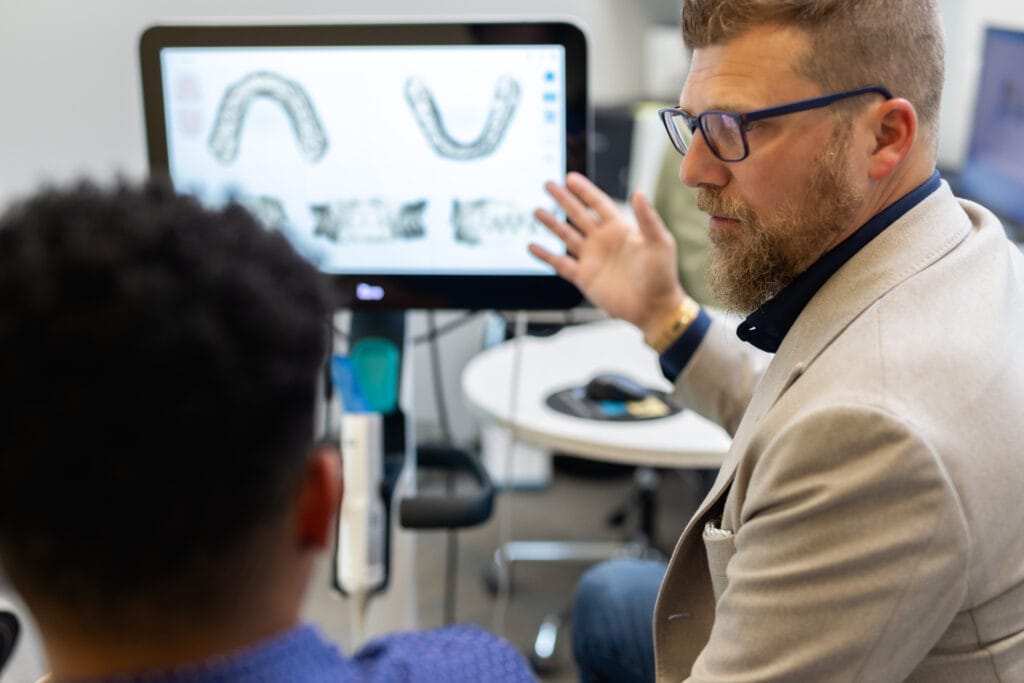
Yes, you can. A tooth that’s had a root canal is still anchored in living bone and ligament, and that’s what orthodontic movement depends on. In our offices, root canal-treated teeth move into place on the same schedule as their neighbors. The real questions are when to start and how to protect the tooth along the way.
Why a Root Canal Doesn’t Block Orthodontic Treatment
A root canal removes the nerve and pulp from inside the tooth. It doesn’t touch the outside of the root or the periodontal ligament wrapped around it. Teeth move because that ligament and the surrounding bone remodel under gentle pressure. Since a root canal leaves that system intact, the tooth responds to braces or aligners normally.
Worried about root shortening? Research suggests endodontically treated teeth are no more prone to root resorption than untreated teeth, and in some studies slightly less. We cover that topic in depth in Can Invisalign cause root damage?
How Long After a Root Canal Can You Get Braces?
| Your situation | Typical wait before starting |
|---|---|
| Root canal done, no infection, no symptoms | Often a few weeks, once your dentist confirms healing |
| Root canal for an abscess or infection at the root tip | Usually 3–6 months, until an X-ray shows the bone healing |
| Temporary crown in place | Wait for the permanent crown (especially for Invisalign) |
| Tooth was knocked or injured (trauma) | Case by case; we’ll want recent X-rays first |
Your endodontist or general dentist makes the healing call. We coordinate with them directly, so you aren’t stuck relaying messages. Here’s why we ask for your dental records and X-rays.

What We Check Before Moving a Root Canal Tooth
- Healing at the root tip. A recent X-ray tells us the infection is resolved.
- The seal and filling. A well-sealed canal prevents reinfection during treatment.
- Tooth strength. Root canal teeth can be more brittle. Back teeth usually need a crown before heavy orthodontic forces.
- Gum and bone support. Healthy bone around the root matters more than anything inside it.
- History of injury. A previously traumatized tooth can occasionally fuse to the bone (ankylosis), which changes the plan.
Braces vs. Invisalign on a Root Canal Tooth
Traditional Braces
Brackets bond well to natural enamel. If your treated tooth has a porcelain or zirconia crown, we prepare the surface with a special etching and bonding process so the bracket holds. Brackets on crowns pop off slightly more often, so tell us right away if one comes loose. More on life with braces.
Invisalign Clear Aligners
Aligners spread gentle pressure across the whole tooth surface, which many patients and dentists like for a tooth with a large filling or crown. Small tooth-colored attachments can bond to crowns too. One rule: get your permanent crown before your 3D scan. A new crown changes the tooth’s shape, and your aligners have to match it. Read our full guide on Invisalign with crowns, or see how we approach Invisalign treatment.

What If You Need a Root Canal During Treatment?
It happens, and it’s manageable. Your dentist can usually reach the tooth’s canals from the chewing surface without removing a bracket. With Invisalign, you simply take out your aligners for the appointment. If the tooth needs a new crown afterward, we may rescan and adjust your remaining aligners so they fit the new shape. Getting a crown mid-treatment? See getting a dental crown with braces or Invisalign.
Front Tooth Root Canals
Front teeth often get root canals after a sports injury or old fall. They may look slightly darker than their neighbors. Braces or aligners can move them normally, and once treatment is done, internal bleaching or a veneer can match the color. A GLO whitening session brightens the rest of your smile to match.
Other Dental Work and Orthodontics
- Braces or Invisalign after an extraction or wisdom tooth removal
- Orthodontics for adults with crowns, bridges and fillings
Talk to an Orthodontist About Your Treated Tooth

Bring your latest X-rays (or let us request them) to a free consultation. We’ll check the tooth, compare braces and Invisalign for your case and give you a clear start date. Schedule your free visit at one of our seven offices across the Triangle.
Root Canal and Orthodontics FAQs
Can you get Invisalign with a crown and a root canal?
Yes. Aligners and attachments work on crowned teeth. Just finish your permanent crown before your scan.
Will braces make my root canal fail?
No evidence shows that normal orthodontic forces cause a well-sealed root canal to fail.
Do root canal teeth move slower?
Not in a way you’d notice. They typically keep pace with the teeth around them.
Should I get braces before or after a root canal?
If a tooth needs a root canal, treat it first. Moving an infected tooth isn’t safe.